Project Zomboid
Related Games





Description
Overview of Project Zomboid for PC
Project Zomboid is a hardcore survival game developed by The Indie Stone, and it sets out to depict the zombie apocalypse not as a thrilling adventure, but as a slow, grinding collapse of everyday life.
From the very first moment, the game establishes its bleak tone by reminding the player that survival is temporary and death is inevitable, framing the entire experience as a personal struggle rather than a heroic journey.
Unlike most games in the genre, Project Zomboid does not begin with explosions, scripted chaos, or dramatic escapes, but instead drops the player into a world where the disaster has already happened.
The quiet streets, abandoned homes, and lingering signs of normal life create an unsettling contrast that makes the apocalypse feel disturbingly believable, especially as the player slowly realizes that no help is coming and no grand ending awaits.
Project Zomboid Features
Project Zomboid builds its identity through layered systems that interact constantly, creating emergent stories shaped entirely by player decisions and mistakes rather than scripted events.
Deep Survival Simulation
The game tracks an unusually wide range of physical and psychological conditions, including hunger, thirst, fatigue, injuries, illness, panic, boredom, and long-term fitness. Ignoring even a single aspect of your character’s wellbeing can quietly spiral into disaster, turning small oversights into fatal consequences hours later.
Persistent Open World
Knox Country is a large, fully persistent map where every action leaves a lasting mark on the environment.
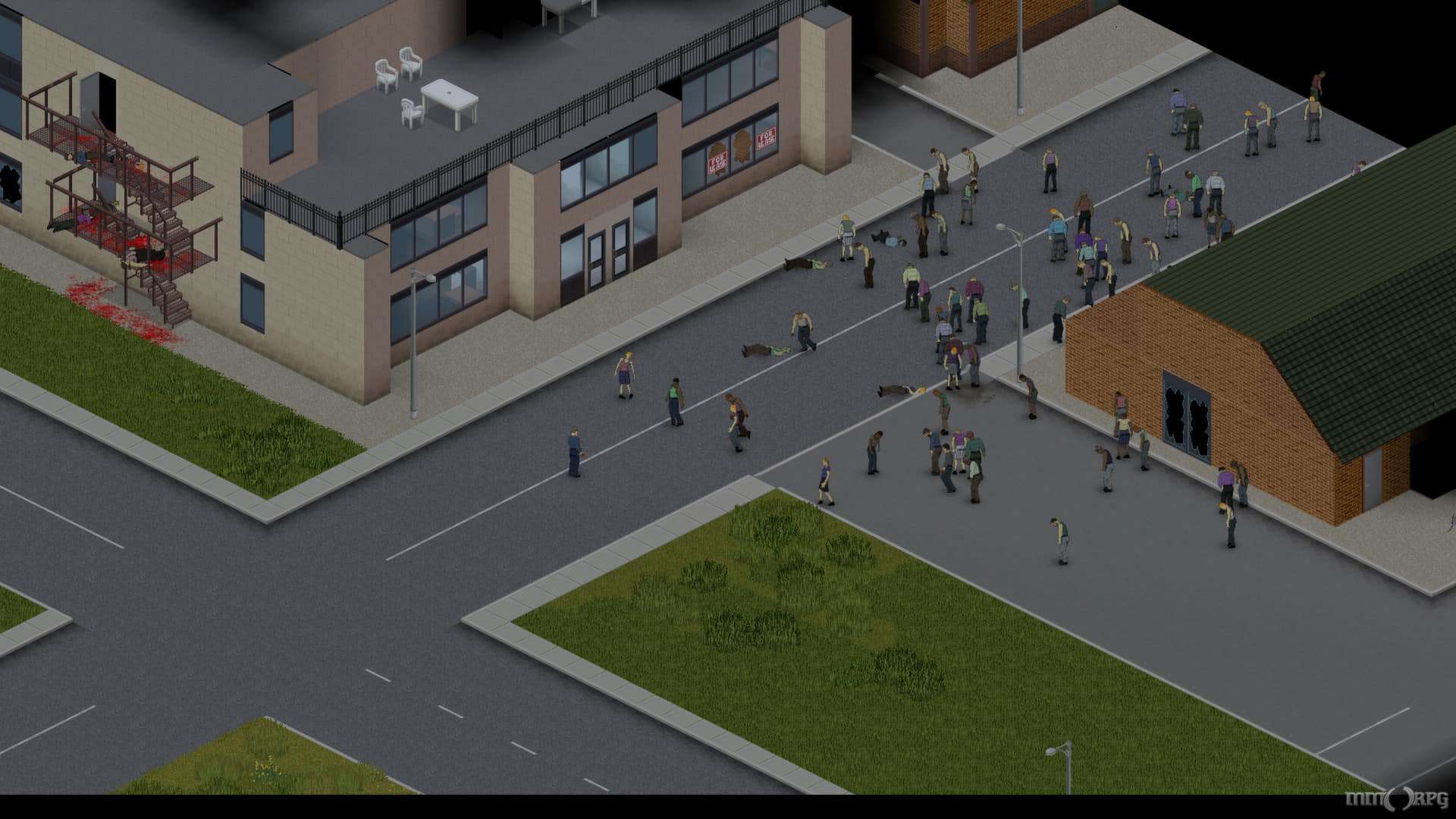
Barricaded houses remain fortified, broken windows stay shattered, and corpses pile up where battles were fought, reinforcing the feeling that the world exists independently of the player.
Meaningful Character Creation
Character creation allows players to choose professions and traits that significantly alter gameplay rather than offering minor statistical bonuses. A carpenter, a burglar, or an unemployed survivor all approach early survival differently, shaping strategies and influencing how risks are evaluated.
Crafting and Base Building
Crafting systems encourage long-term thinking by allowing players to fortify buildings, build furniture, grow crops, collect rainwater, and restore electricity. A well-prepared base can feel like a genuine sanctuary, although complacency often proves deadly once noise, curiosity, or overconfidence attracts attention.
Modding and Replay Value
The game enjoys strong community support, with mods expanding mechanics, adding items, introducing new professions, or completely reshaping the experience. This flexibility ensures that even experienced players can continuously rediscover the game through new challenges and playstyles.
Gameplay
The core gameplay of Project Zomboid is intentionally slow and methodical, emphasizing caution, planning, and restraint over reflexes or aggressive play.
- Exploration and Scavenging
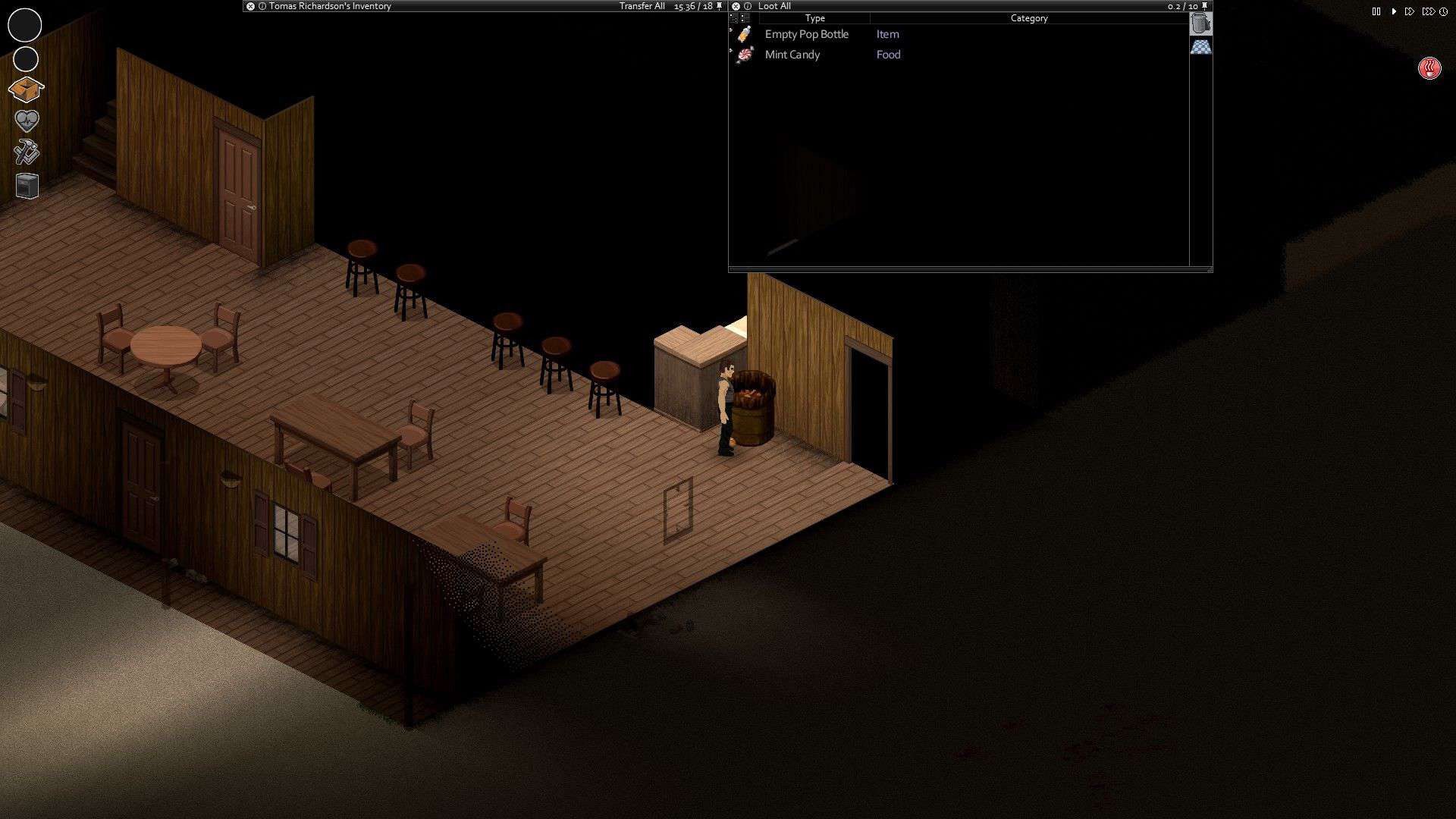
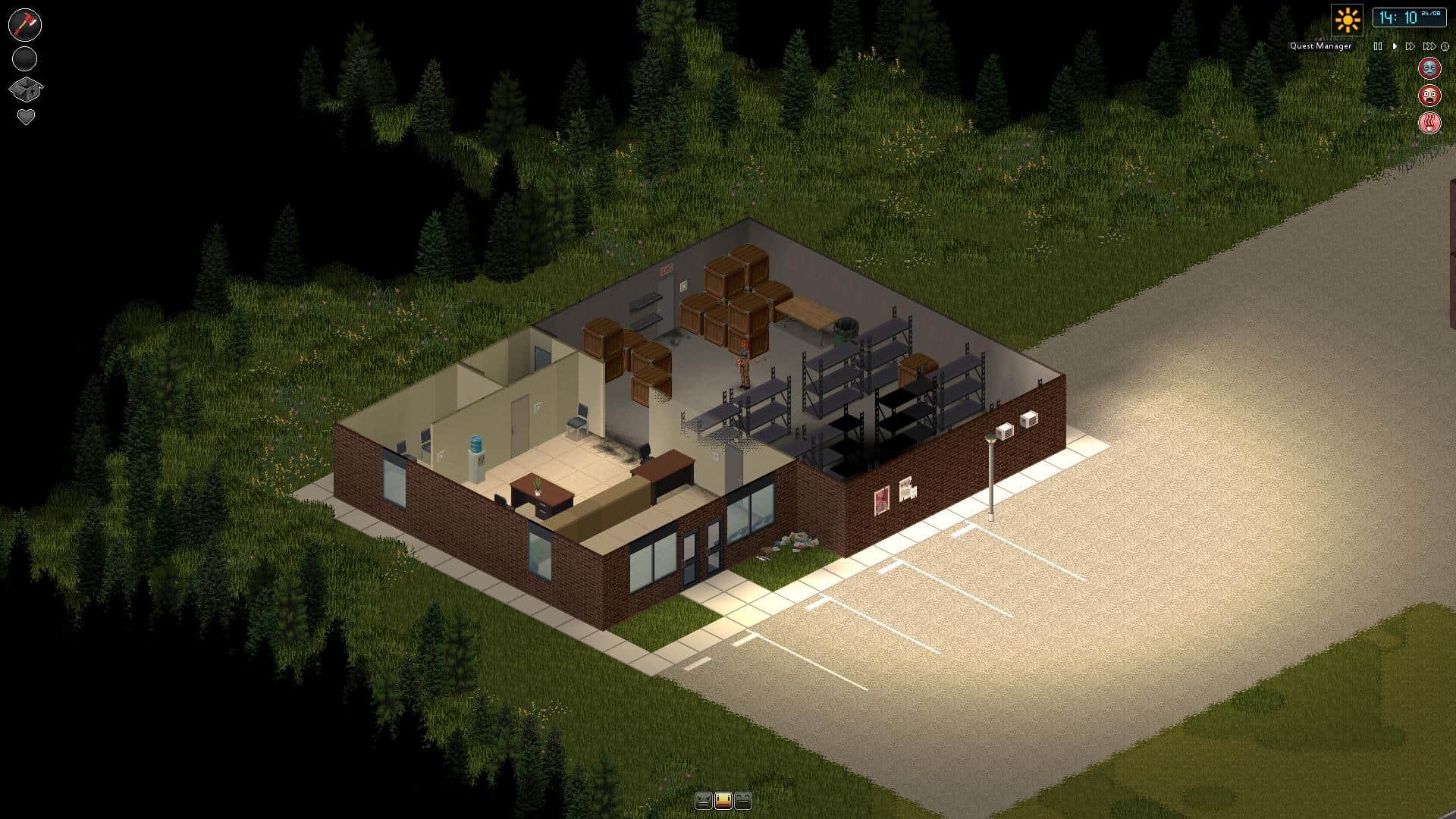
Exploring the world revolves around carefully looting houses, stores, and warehouses for food, tools, books, and weapons.
Even routine scavenging runs can become deadly if an alarm triggers or a single zombie draws a larger group from nearby streets. - Combat and Threat Management
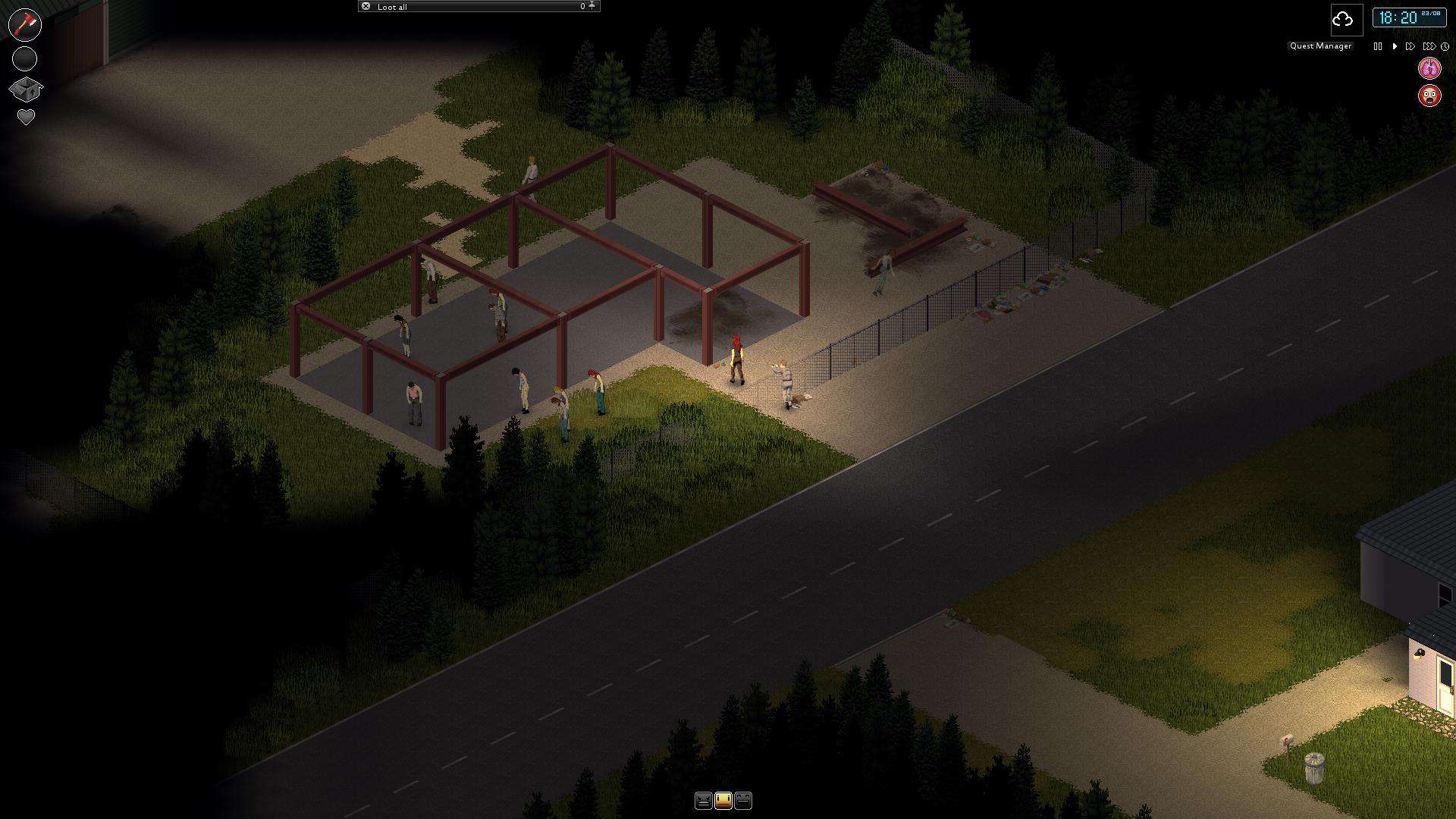
Combat feels deliberately awkward and dangerous, forcing players to consider positioning, stamina, and escape routes at all times.
Engaging multiple zombies is rarely wise, reinforcing the idea that survival is often about avoidance rather than confrontation. - Skill Progression and Learning
Skills improve slowly through repetition and reading manuals, which reinforces the game’s long-term pacing and sense of earned competence.
Becoming proficient in carpentry or mechanics feels meaningful because progress requires patience, planning, and sustained effort. - Time, Seasons, and Sustainability
As time passes, utilities shut down, food spoils, and seasons change, gradually shifting the focus from short-term survival to sustainability.
Preparing for winter becomes a defining challenge, forcing players to think months ahead rather than reacting to immediate threats.
Evolving Tone Over Time
Early gameplay often reminds players of survival titles like 7 Days to Die, especially through scavenging, base preparation, and the ever-present danger of being overwhelmed if defenses fail.
However, as the days stretch into weeks, the experience transforms into something quieter and more introspective, where isolation and routine dominate the player’s thoughts.
Much later, particularly during long solo runs, the emotional weight begins to resemble the slow-burning tension found in The Long Dark, where loneliness, exhaustion, and mental strain become just as threatening as physical danger. This gradual shift in tone is one of the game’s greatest strengths, allowing it to feel familiar at first while steadily carving out its own unique identity.
Pros and Cons
Pros
- Exceptionally deep survival systems that create constant tension and meaningful decision-making.
- A persistent world that reacts believably to player actions and long-term neglect.
- Strong atmosphere built through pacing, sound design, and environmental storytelling.
- Extensive modding support that dramatically extends replay value.
Cons
- A steep learning curve that can feel punishing and unforgiving to new players.
- Combat controls and animations can feel clumsy during high-pressure situations.
- Slow development pace may frustrate players waiting for specific updates or features.
SYSTEM REQUIREMENTS
OS: Windows 7 / Windows 8 / Windows 10 / Windows 11
Processor: Intel 2.77 GHz Dual Core or equivalent
Memory: 4 GB RAM
Graphics: 1 GB VRAM NVIDIA GeForce 9600 GT or equivalent)
DirectX: Version 11
Storage: 5 GB available space
Game Info
Genre: Indie, RPG, Simulation, Early Access
Developer: The Indie Stone
Platform: PC
Game Size: 4.5 GB
Released By: 0xdeadc0de (OFME)
Version: v42.13.0
Installed Game
Images