Sid Meier’s Civilization VII
Related Games





Description
Overview of Sid Meier’s Civilization VII for PC
Sid Meier’s Civilization VII arrives as the long-awaited next chapter in one of the most iconic and enduring strategy series in gaming history, developed by Firaxis Games and published by 2K Games after nearly a decade of silence since Civilization VI. It continues the legendary 4X tradition of exploring, expanding, exploiting, and exterminating, but does so through a renewed design philosophy that seeks to challenge how players think about progress, culture, and leadership across millennia. Every campaign begins at the dawn of human history and evolves through ages of discovery, conflict, and transformation, inviting you to write the story of civilization itself one careful decision at a time.
Civilization VII builds on the foundations of its predecessors while introducing era-based progression, modular civilizations, and more dynamic diplomacy, ensuring that each session feels less like a replay of history and more like an experiment in alternate destiny. The result is a complex, living sandbox that blends familiar systems with bold ideas, creating one of the deepest strategy experiences Firaxis has ever attempted.
Sid Meier’s Civilization VII Features
- Era-Based Civilization System: Instead of guiding a single civilization from the Stone Age to the Space Age, you now evolve through three grand historical eras, redefining your nation’s identity and adapting to global changes as time marches on.
- Decoupled Leaders and Civilizations: Leaders are no longer permanently tied to one nation, giving players freedom to mix personalities, philosophies, and abilities to suit their strategic style and the demands of each era.
- Deepened Diplomacy and Global Politics: Negotiations, alliances, and rivalries evolve dynamically based on ideology, trade interests, and territorial ambitions. Empires now remember past betrayals and rewards, making diplomacy far more consequential.
- Expanded City Management: Cities function as intricate networks of districts, culture centers, and production hubs that respond to geography and population diversity. Every new building decision can shift your empire’s balance of power.
- Cross-Platform and Cross-Progression Play: Civilization VII supports full cross-play and progression sharing between PC, console, and handheld devices, allowing players to continue their campaigns anywhere they wish.
- Immersive VR Experience: A dedicated VR mode re-imagines the Civilization board as a three-dimensional living diorama, giving commanders the ability to oversee their world in tangible, physical space.
Gameplay
The Flow of History and the Age System
The defining innovation of Civilization VII lies in its reimagined era structure, where players no longer represent a single civilization eternally but instead guide a cultural lineage that transforms with each new epoch. This change forces you to think historically rather than mechanically, since every age introduces new philosophies, technologies, and leadership options that reshape your approach. The transition from Antiquity to Exploration or Modernity is not merely aesthetic; it is a fundamental shift in identity that demands reflection on how your society will endure change.
What makes this mechanic fascinating is the tension it creates between continuity and reinvention. Should you remain faithful to the principles that defined your early civilization, or embrace a new ethos better suited to the modern world? Every decision, from policy choice to leader selection, contributes to an evolving tapestry that feels genuinely alive, turning each campaign into an unpredictable journey through time.
City Planning and Internal Growth
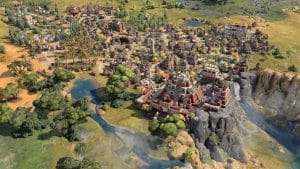
Civilization VII deepens the process of urban development with systems that make every tile and district decision carry lasting consequences. Cities now act as intricate ecosystems whose growth depends on geography, population diversity, and environmental sustainability. Farmland, industrial centers, and cultural quarters no longer exist in isolation but interact organically, affecting productivity and happiness in subtle yet powerful ways.
The new population model also adds weight to governance, forcing rulers to balance prosperity with unrest. A neglected province can spark dissent or even revolt, while wise investment and fair policies foster unity and innovation. The sensation of nurturing a living world is stronger here than in any previous entry, transforming the map from a static grid into a dynamic landscape of ambition and risk.
Diplomacy, Warfare, and Strategy
No civilization can thrive alone, and Civilization VII’s diplomacy system ensures that every interaction with neighboring powers matters. Alliances now form not simply for convenience but as results of shared ideologies or mutual threats, while betrayals carry memories that last generations. Negotiation, espionage, and trade blend together into a political game of promises and deception, where words can wield as much power as armies.
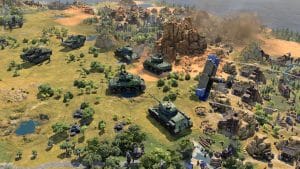
Combat has also evolved to demand greater strategic foresight. Terrain, logistics, and morale play defining roles, rewarding patience and planning over brute force. Units operate within realistic supply networks, and generals develop traits that influence battlefield outcomes. Wars feel longer, costlier, and more personal, echoing the messy nature of real-world empires.
Multiplayer and Cross-Platform Integration
Firaxis clearly designed Civilization VII with the modern gaming community in mind, emphasizing accessibility and connection across devices. The introduction of full cross-play and shared saves allows campaigns to continue seamlessly between PC, consoles, and handhelds, removing barriers that previously divided players. Multiplayer matches have been refined to run faster, with new asynchronous and cooperative modes encouraging both competitive and narrative-driven play.
The result is a strategy platform that feels communal yet still deeply personal. Whether you wage wars of ideology against friends or form fragile alliances that collapse under greed, every session builds a story worth remembering. Civilization VII becomes not only a game of conquest but also a game of relationships, a social experiment stretched across centuries of simulated history.
The VR Edition and Presentation
For those seeking an entirely fresh perspective, Civilization VII introduces a unique VR mode that reimagines empire management as a tangible experience. Players can view their empire as if standing above a living table, manipulating terrain and cities with their hands while observing the flow of history unfold in real space. The sense of scale and intimacy this brings to the series is remarkable, transforming what was once abstract data into something tactile and alive.
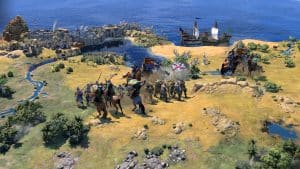
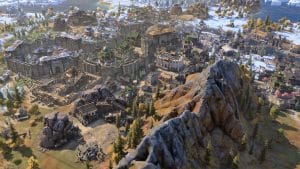
Visually, the game blends the stylized clarity of Civilization VI with more grounded textures and lighting. Landscapes shift with climate and era, from sun-baked deserts in antiquity to glittering skylines in modern times. The orchestral soundtrack swells and evolves alongside your civilization’s progress, underscoring the grandeur of human ambition with the subtle melancholy of impermanence.
Pros and Cons
Pros
- Transformative Era System: The decision to let civilizations evolve between ages introduces true narrative progression, ensuring that every campaign tells a distinct historical story.
- Deep Diplomacy and Political Realism: Alliances, betrayals, and ideologies feel organic, creating a living world of shifting loyalties and moral choices.
- Enhanced City Development: Urban planning now feels consequential and satisfying, rewarding foresight and punishing neglect in believable ways.
- Cross-Play and VR Innovation: Firaxis successfully merges tradition with technology, bringing the series to new audiences without sacrificing depth.
- Artistic Cohesion: The blend of painterly visuals and adaptive music perfectly captures the grandeur and fragility of civilization itself.
Cons
- Steep Learning Curve: The expanded systems can overwhelm newcomers and even veterans who expect the straightforward rhythm of earlier titles.
- Interface Complexity: Despite visual elegance, certain menus and tooltips feel dense, occasionally slowing down decision-making during long sessions.
- Era Switching Limitations: The mandatory civilization transitions may frustrate players who prefer to nurture a single culture from beginning to end.
SYSTEM REQUIREMENTS
- OS: Win 10 64 Bit
- Processor: Intel i5-4690 / Intel i3-10100 / AMD Ryzen 3 1200
- Memory: 8 GB RAM
- Graphics: NVIDIA GTX 1050 / AMD RX 460 / Intel Arc A380
- DirectX: Version 12
- Storage: 20 GB available space
Game Info
Genre: Strategy
Developer: Firaxis Games
Platform: PC
Game Size: 20 GB
Released By: RUNE
Version: v1.3.1
Installed Game
Images
Video
Developer's games
Best Games